
Venus Retrograde in Scorpio How Rescue Pets and Their Carers Are Affected

A rescue animal does not arrive as a blank slate. They arrive with a body that remembers, habits that once kept them safe, and a heart that may need time before it believes soft hands mean comfort.
That is why Venus retrograde in Scorpio can feel so relevant for rescue pets and the people who care for them. In astrology, Venus speaks to affection, bonding, comfort, pleasure, and what we value. Scorpio brings themes of trust, fear, control, loss, survival, and emotional honesty. A retrograde asks for review rather than rush.
Taken literally, the planets do not replace good veterinary care, proper training, or patient behaviour support. Taken symbolically, this period can offer a useful lens. It invites carers to slow down, notice what is happening beneath the surface, and rebuild connection with more care.
For rescue pets, that can mean old fears showing up in small ways. For carers, it can mean facing guilt, frustration, overattachment, or the strong desire to “fix” everything quickly. The work is quieter than that. It is about safety, trust, and the kind of love that does not demand instant proof.

Venus retrograde asks carers to rethink love and attachment
Venus is often linked with romance, beauty, ease, and pleasure. In the context of animal care, it points to the ways humans offer love: food, touch, comfort, routine, attention, and protection.
When Venus appears retrograde, astrology frames this as a time of review. The usual flow can feel slower. Affection may not land in the expected way. Old relationship patterns can resurface.
With rescue pets, this can show up as a carer wondering why love is not “working” yet.
A cat may hide after weeks of progress. A dog may flinch at a movement that seemed fine yesterday. A rabbit may accept food but resist handling. A bird may bond strongly with one person and panic around others.
These changes can feel personal, but they often are not. Rescue animals can move forwards and backwards as they learn what safety means in a new place.
A Venus retrograde frame encourages one key question: am I offering love in the form this animal can actually receive?
For some animals, love looks like cuddles. For others, it looks like distance.
It may look like:
A quiet room with a covered crate or hiding spot
Predictable feeding times
A slow blink from across the room
A walk where no one forces greetings
A hand that stops reaching when the animal turns away
A carer who lets the animal choose contact
This is not less loving. It is more respectful. Rescue pets often need consent-based care before they can enjoy closeness.
Scorpio brings hidden fears to the surface
Scorpio is connected with depth, instinct, secrecy, vulnerability, and survival. In a rescue setting, these themes are easy to recognise. Many animals in care have experienced major disruption, even when their full history is unknown.
Some have been surrendered after a death, move, illness, financial stress, family breakdown, or housing crisis. Others have lived as strays or come through pounds, shelters, foster homes, or neglect cases. Some have had good care but still carry the stress of losing their people.
Scorpio symbolism asks us to look under the behaviour.
A growl is not just “bad manners”. It may be a boundary.
Toileting inside may not be spite. It may be stress, illness, confusion, scent insecurity, or lack of house training.
Clinginess may not be affection alone. It may be fear of abandonment.
Destructiveness may not be rebellion. It may be panic, boredom, pain, or a nervous system that cannot settle yet.
When carers look only at the surface, they can respond too harshly or too quickly. When they look deeper, they can ask better questions.
What happened just before the behaviour?
Was there a sound, smell, visitor, storm, delivery driver, vacuum, another animal, or change in routine?
Was the pet tired, hungry, overstimulated, sore, or cornered?
Did the animal have a choice to move away?
Scorpio’s lesson is not to dramatise every reaction. It is to respect the fact that fear often hides behind behaviour.

Rescue pets may become more sensitive to pressure
During a period associated with emotional review, carers may notice that their animals seem less tolerant of pressure. This does not mean something mystical has gone wrong. It may simply be that the household is carrying more feeling than usual, and sensitive animals respond to subtle shifts.
Animals notice body language. They notice pace. They notice tone. They notice whether a hand hesitates before touching them. They notice visitors, changed work hours, tension between people, and the carer’s emotional state.
Rescue pets can be especially alert because alertness may have helped them survive.
A dog who has known instability may follow their carer from room to room. A cat from a multi-animal environment may guard doorways or food bowls. A horse with a rough handling history may brace before being caught. A small animal may freeze when lifted because being grabbed has never felt safe.
This is where Venus in Scorpio can be a useful metaphor. Love mixed with fear can become intense. Carers may try harder, fuss more, or hover. The animal may then feel more watched, more pressured, or more trapped.
The antidote is calm structure.
A rescue pet does not need constant emotional checking. They need a life that becomes pleasantly boring.
Good support may include:
Regular meals in the same place
Short, predictable training sessions
Gentle enrichment, such as sniffing, chewing, foraging, or puzzle feeders
Clear rest periods without interruption
Safe zones where no one touches or follows them
Slow introductions to people, animals, rooms, and outdoor spaces
Veterinary checks when behaviour changes suddenly
If a pet shows ongoing panic, aggression, shutting down, self-harm, compulsive behaviour, or sudden changes in appetite, movement, or toileting, a vet should be the first stop. Pain and illness can look like behaviour problems. A qualified positive-reinforcement trainer or veterinary behaviour professional can also help.
Carers may face their own rescue patterns
Rescue pet care can bring up deep emotions in people. This is part of the Venus and Scorpio story too.
Many carers carry a strong wish to make up for what an animal has lost. That wish can be beautiful. It can also become heavy. The carer may feel rejected when a pet hides, ashamed when progress slows, or anxious when the animal bonds with someone else.
Some carers overgive. They spend beyond their limits, cancel plans, lose sleep, or take every setback as a personal failure. Others become controlling without meaning to. They manage every interaction, avoid all discomfort, and struggle to let the animal build normal resilience.
A helpful question is: am I responding to the animal in front of me, or to the story I imagine they carry?
Sometimes a sad backstory causes people to lower all boundaries. A dog who has suffered still needs kind rules. A cat who has been abandoned still needs safe handling. A traumatised horse still needs patient, consistent groundwork. Compassion and structure belong together.
Carers can support themselves by keeping simple notes rather than relying on feelings alone.
Track:
Triggers
Recovery time
Appetite
Sleep
Play
Toileting
Body language
Successful moments
Changes in routine
This creates a clearer picture. It also helps carers see progress that would otherwise be missed. A dog who once barked for ten minutes after a noise may now recover in thirty seconds. A cat who hid all day may start eating while someone is in the room. These changes matter.

Old bonds and past grief may resurface
Venus retrograde is often associated with old relationships returning for review. In rescue care, this can show up as grief.
A newly adopted pet may remind a carer of an animal they lost. A foster carer may feel the ache of saying goodbye again. A pet may pine for a former home, littermate, bonded companion, or familiar routine. Even when rehoming is the right outcome, change can still hurt.
Scorpio adds emotional depth. It does not skim over loss. It asks for honesty.
Rescue work sits close to grief because it involves endings as well as beginnings. A pet’s new start often follows someone else’s hardship. That reality does not reduce the joy of adoption. It gives it weight.
Carers can honour this by allowing transition time.
A rescue pet does not need to become a “happy ending” in the first week. Some animals relax quickly. Others need months before their full personality appears. Some will always carry sensitivities that need management.
That does not mean the adoption has failed. It means the relationship is real.
For carers grieving a previous animal, it helps to avoid comparing timelines. A new dog may not enjoy the same beach walks. A new cat may not sleep on the bed. A new bird may not seek touch. Love may need a different language this time.
That is very Venus retrograde. It asks love to mature.
Jealousy and resource guarding need gentle attention
Scorpio can also symbolise possessiveness, jealousy, and fear of loss. In homes with rescue pets, this may appear around food, sleeping spots, toys, doorways, people, or other animals.
Resource guarding is common across species. It can happen when an animal fears something valuable will be taken away. Punishing it can make the fear worse.
Signs may include:
Freezing over a bowl or toy
Eating faster when approached
Turning the body away
Stiffness, whale eye, growling, hissing, lunging, or snapping
Blocking access to a person or space
Chasing other animals away from resting areas
The safer path is management and trust-building.
Feed animals separately. Give high-value chews only when there is space. Avoid taking items from a pet’s mouth unless safety demands it. Teach swaps with rewards. Keep children away from animals while they eat or rest. Give each pet their own bed, bowl, litter tray, and retreat area.
In multi-pet homes, fairness does not always mean sameness. One animal may need more space. Another may need more enrichment. Another may need help settling when attention goes elsewhere.
How carers can work with this cycle in practical ways
If Venus retrograde in Scorpio feels active in the home, carers can use it as a prompt to review the emotional climate around a rescue pet.
Try these gentle practices over the coming weeks.
Slow the pace of bonding
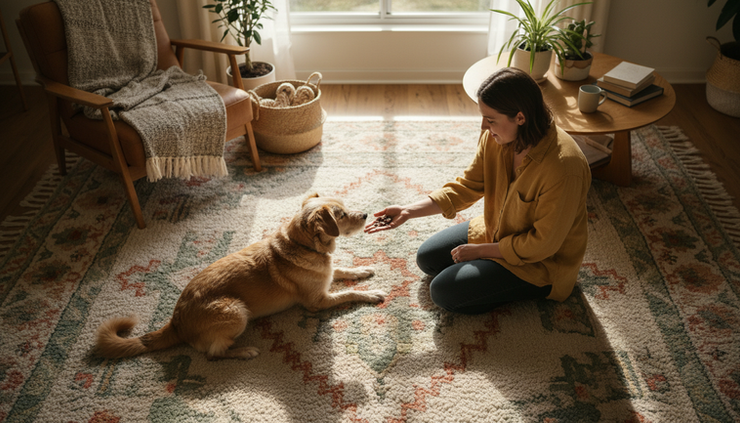
Let the animal approach first when possible. Sit sideways. Keep hands low and relaxed. Avoid leaning over them. For dogs, use walks for sniffing rather than constant obedience. For cats, offer play and retreat rather than forced handling.
Revisit the home setup
Look at the environment from the animal’s height. Are there escape routes? Are bowls placed where the pet feels exposed? Can one animal trap another in a hallway? Is the litter tray private but easy to reach? Is the crate a punishment zone or a genuine resting place?
Small changes can reduce stress.
Watch for consent signals
Consent in animal care does not mean giving the pet every choice. It means noticing their signals and respecting their limits where it is safe to do so.
A pet may lean in, soften their eyes, or reinitiate contact. They may also turn away, lick their lips, flatten their ears, stiffen, tuck their tail, or move back. These signals are information.
Repair after mistakes
Every carer gets it wrong sometimes. A lead is dropped. A voice gets sharp. A visitor moves too quickly. A gate bangs. A pet is pushed past their limit.
Repair matters. Lower the pressure. Give space. Return to predictable routines. Use calm rewards. Do not flood the animal with apologies they cannot understand. Show safety through behaviour.
Ask for help early
Waiting until a situation becomes dangerous helps no one. Vets, force-free trainers, shelter behaviour teams, and qualified behaviour professionals can offer practical plans. Many rescue groups also provide post-adoption advice, especially during the settling-in period.
The deeper lesson is patient love
Rescue pets often teach that affection is not always soft at first. Sometimes love looks like waiting outside a closed bathroom door because a frightened cat has chosen that room as a refuge. Sometimes it looks like walking the same quiet street for weeks because the bigger world is too much. Sometimes it looks like celebrating a tiny tail wag, a relaxed breath, or the first time an animal falls asleep without one eye open.
Venus retrograde in Scorpio points towards a kind of love that is honest, steady, and brave enough to slow down. It asks carers to stop measuring connection by how quickly an animal performs happiness. It asks them to value trust over appearance.
For rescue pets, the gift is not a perfect home with perfect people. It is a home where their signals matter, their fear is not mocked, and their progress is allowed to be uneven.
For carers, the lesson is just as tender. Saving an animal does not mean carrying every wound alone. The best care comes from patience, support, and humility.
A rescue bond grows through repeated proof: food arrives, hands listen, space is respected, pain is checked, fear is met with skill, and love does not disappear on difficult days. That is where the real healing begins.
Starlet Pets Astrology for Pets eBook is available now on Amazon!


Comments